show_if / hide_if
Shows or hides the property, along with any decorators above it, based on some condition.
The condition is an expression evaluated against the edited object, so it can read a property, compare an enum value, or call a method:
@tool # required for method calls in attributes
extends Node3D

enum WeaponType { MELEE, RANGED, MAGIC }

@export
var is_immortal: bool = false

@export
var weapon_type: WeaponType = WeaponType.MELEE

@export_custom(PROPERTY_HINT_NONE, "show_if:weapon_type == WeaponType.MELEE")
var melee_class: String = "class_name"

@export_custom(PROPERTY_HINT_NONE, "show_if:!is_immortal")
var health: int = 100

@export_custom(PROPERTY_HINT_NONE, "hide_if:!is_at_max_health()")
var at_max_health: String = ""


func is_at_max_health():
    return self.health >= self.max_health
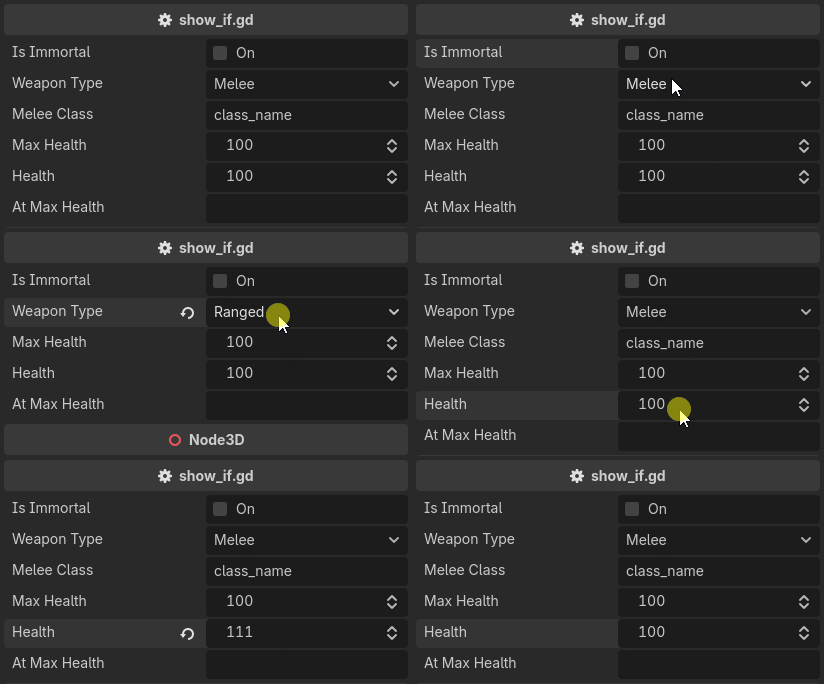
hide_if is show_if with the condition negated. The two are the same attribute written from either side.
You can have more than one condition. They are ANDed, and &&, ||, ! and parentheses
are available inside a single condition as well:
@export_custom(PROPERTY_HINT_NONE, "show_if:flag_0; show_if:flag_1")
var show_if_all: int = 0

@export_custom(PROPERTY_HINT_NONE, "show_if:flag_0 || flag_1")
var show_if_any: int = 0
Note
A condition that fails to evaluate counts as satisfied, so a property never disappears because of a typo. The failure is reported instead. See Diagnostics.
Note
Validators do not run on a hidden property, and its message bubble hides with it.